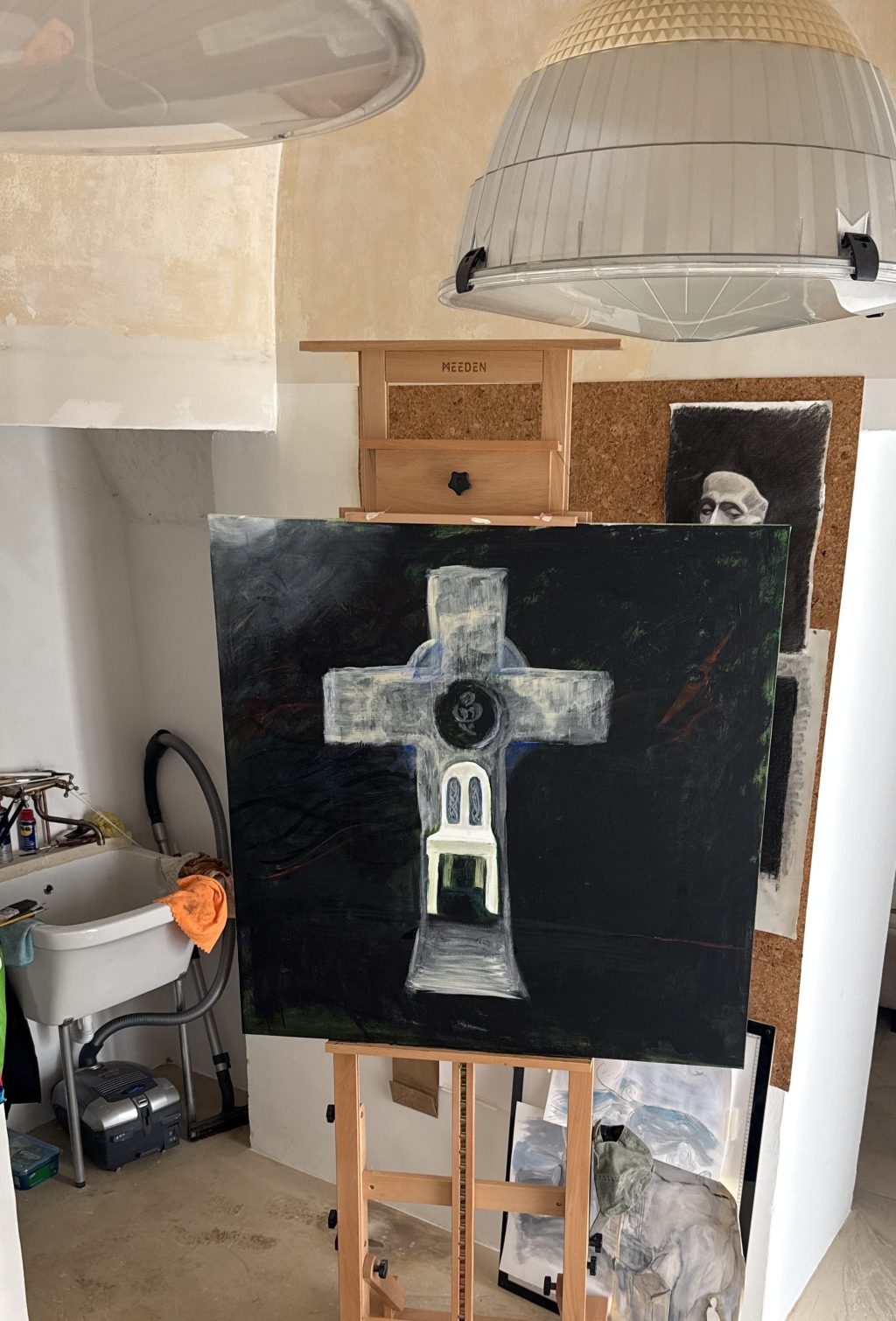
The last few weeks in the studio I nearly restarted a painting three times.
That isn’t dramatic exaggeration. It’s simply the truth of what happens when you stop performing and start searching.
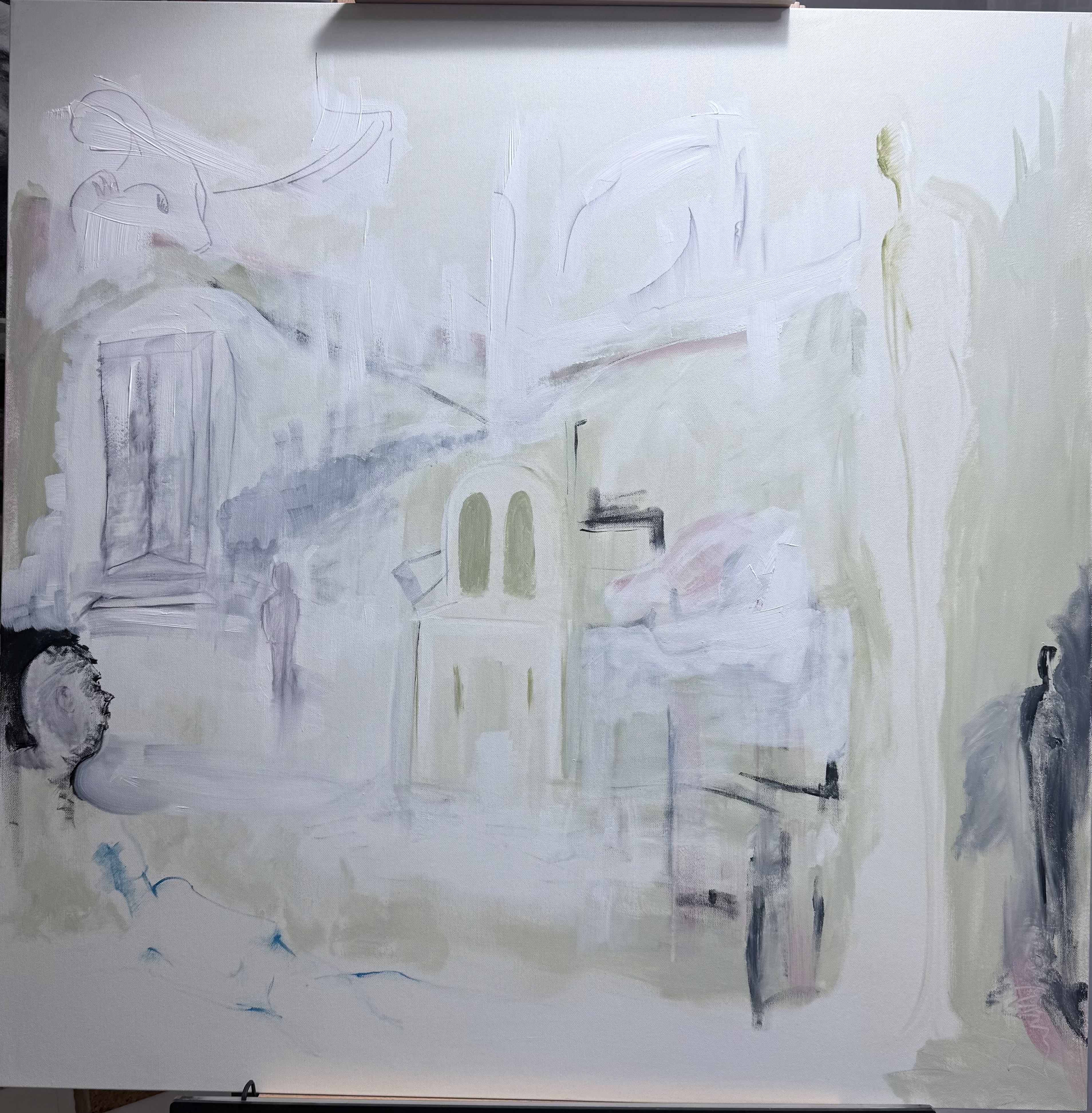
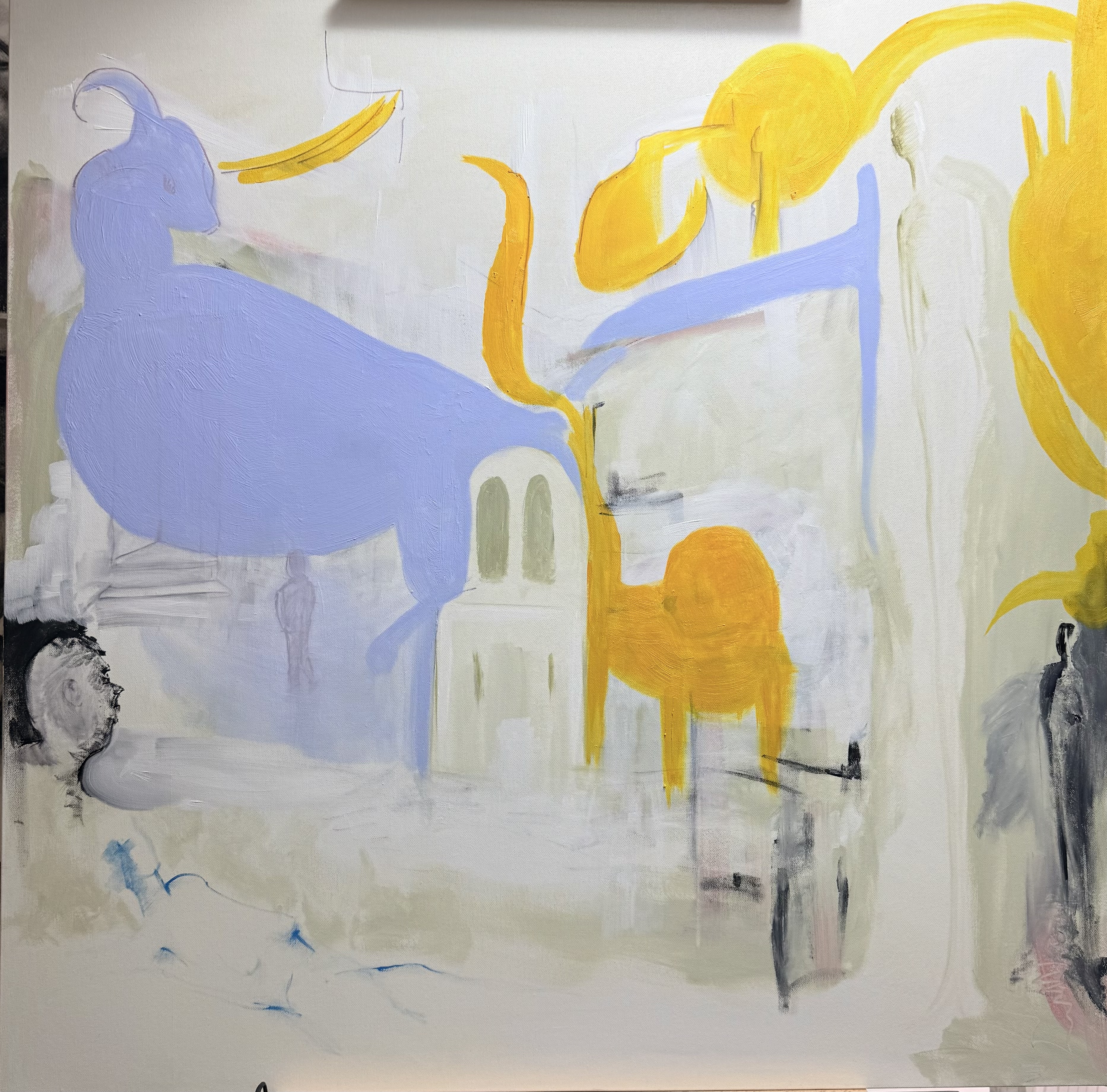
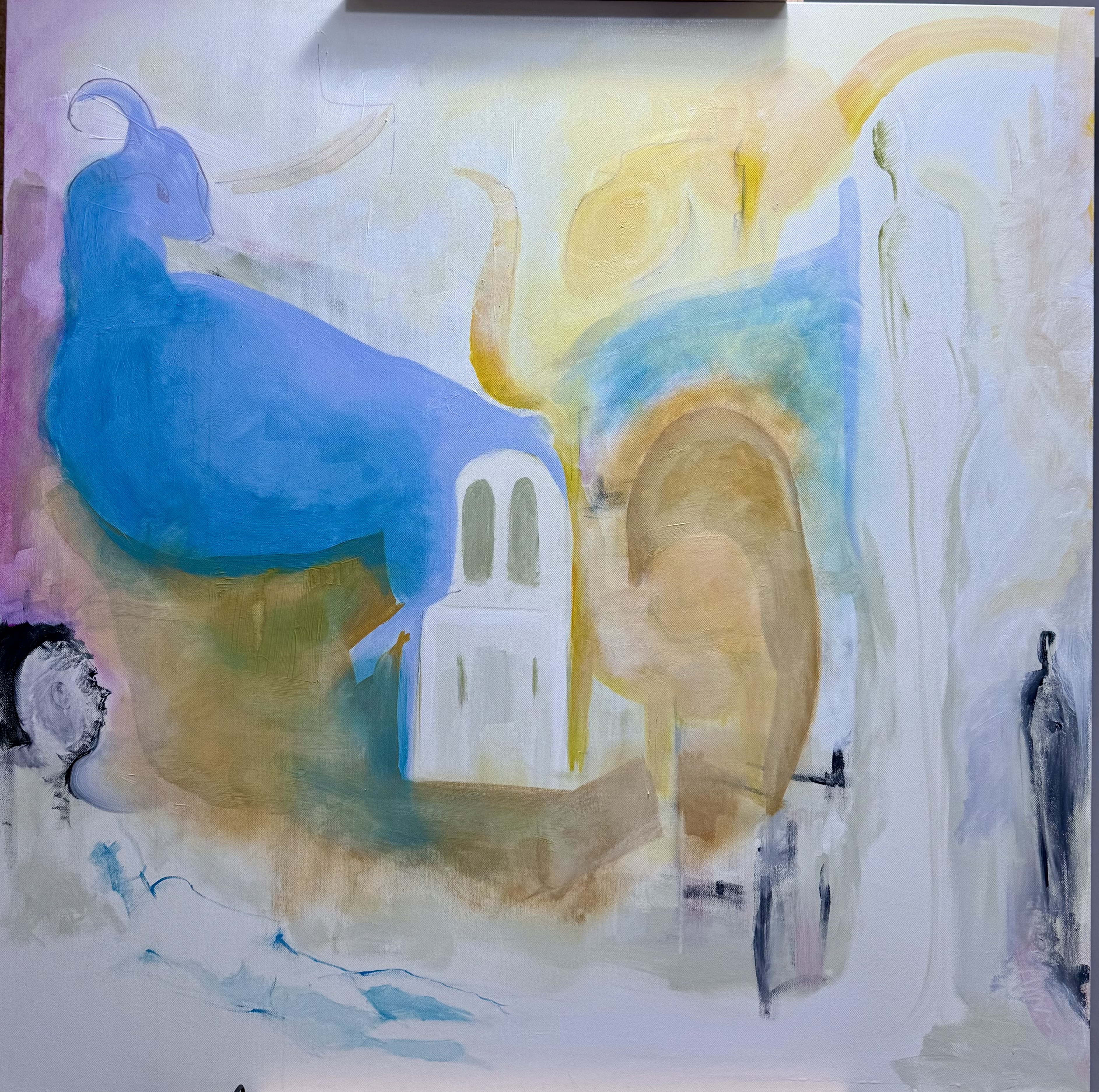
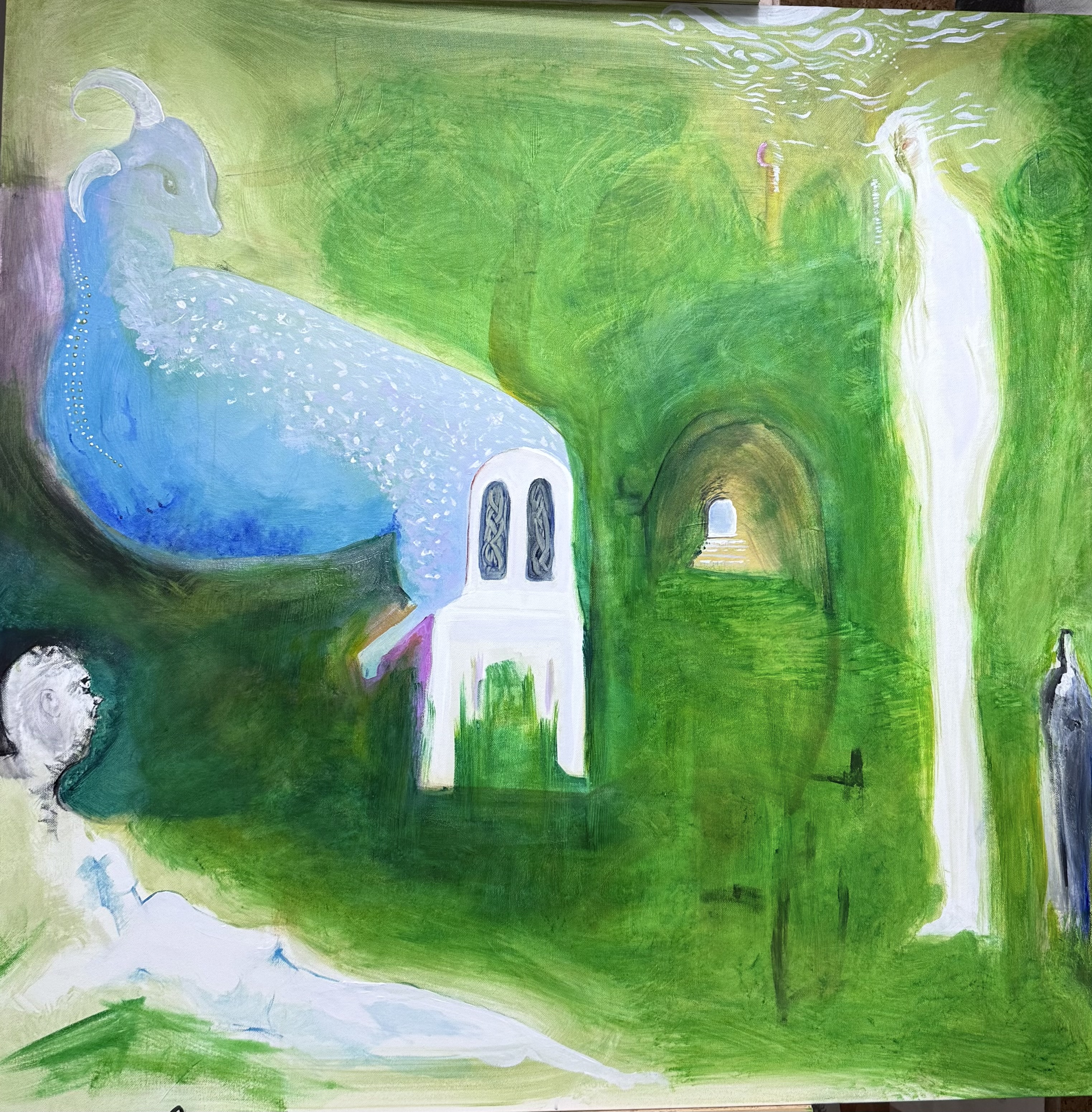
I began with symbols — figures, creatures, mythic structures, tunnels, spirits. The canvas filled quickly. There was narrative, atmosphere, ambition. It looked “interesting.” It felt active.
But something was wrong.
Not technically wrong. Existentially wrong.
The more I added, the more I could hear my inner commentator. The voice that analyses, compares, evaluates. The voice trained by years of business, leadership, and more recently, academic realism. It knows proportion, value, finish. It wants coherence. It wants authority. It wants to prove.
That voice is useful.
It is not my centre.
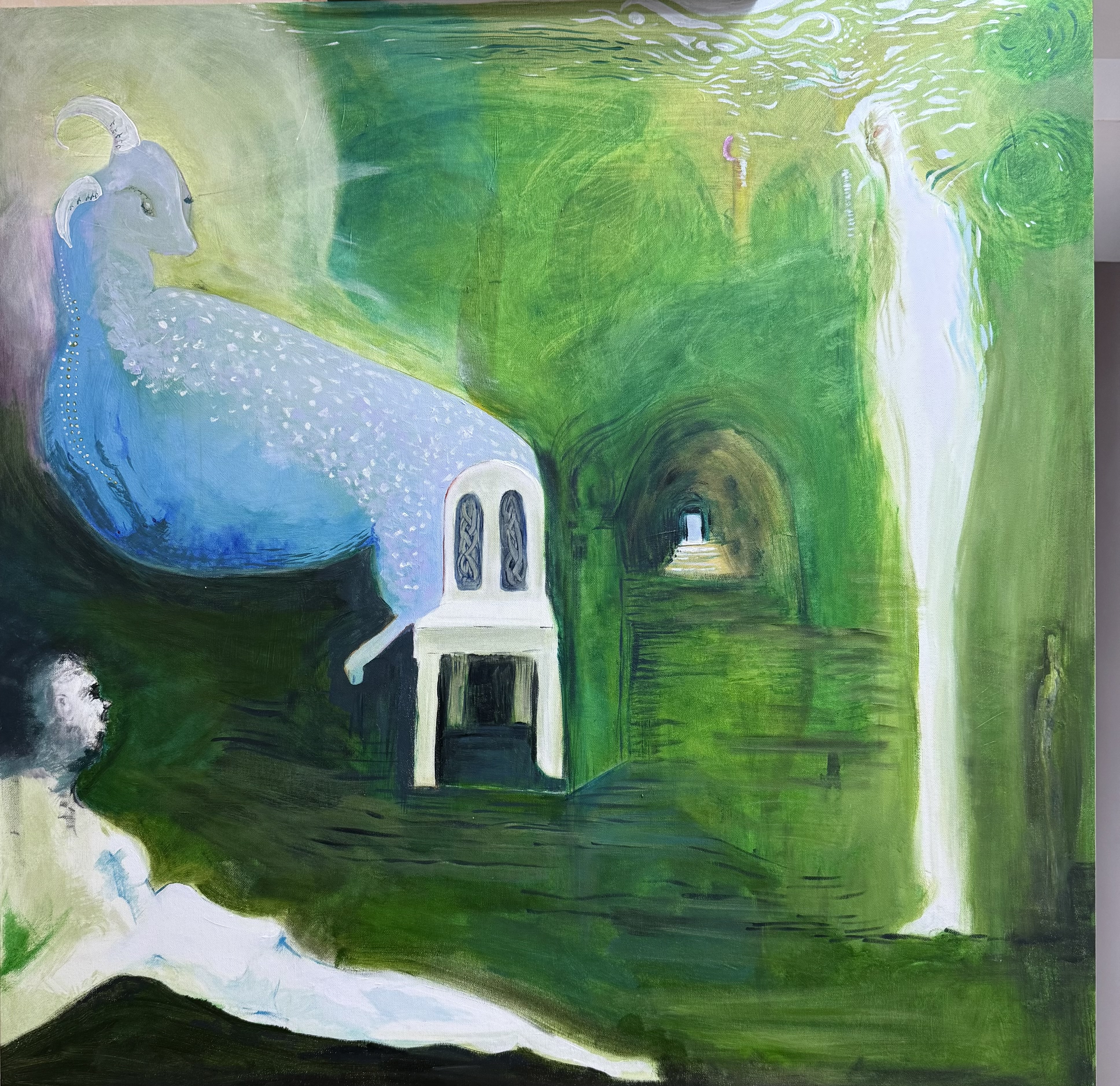
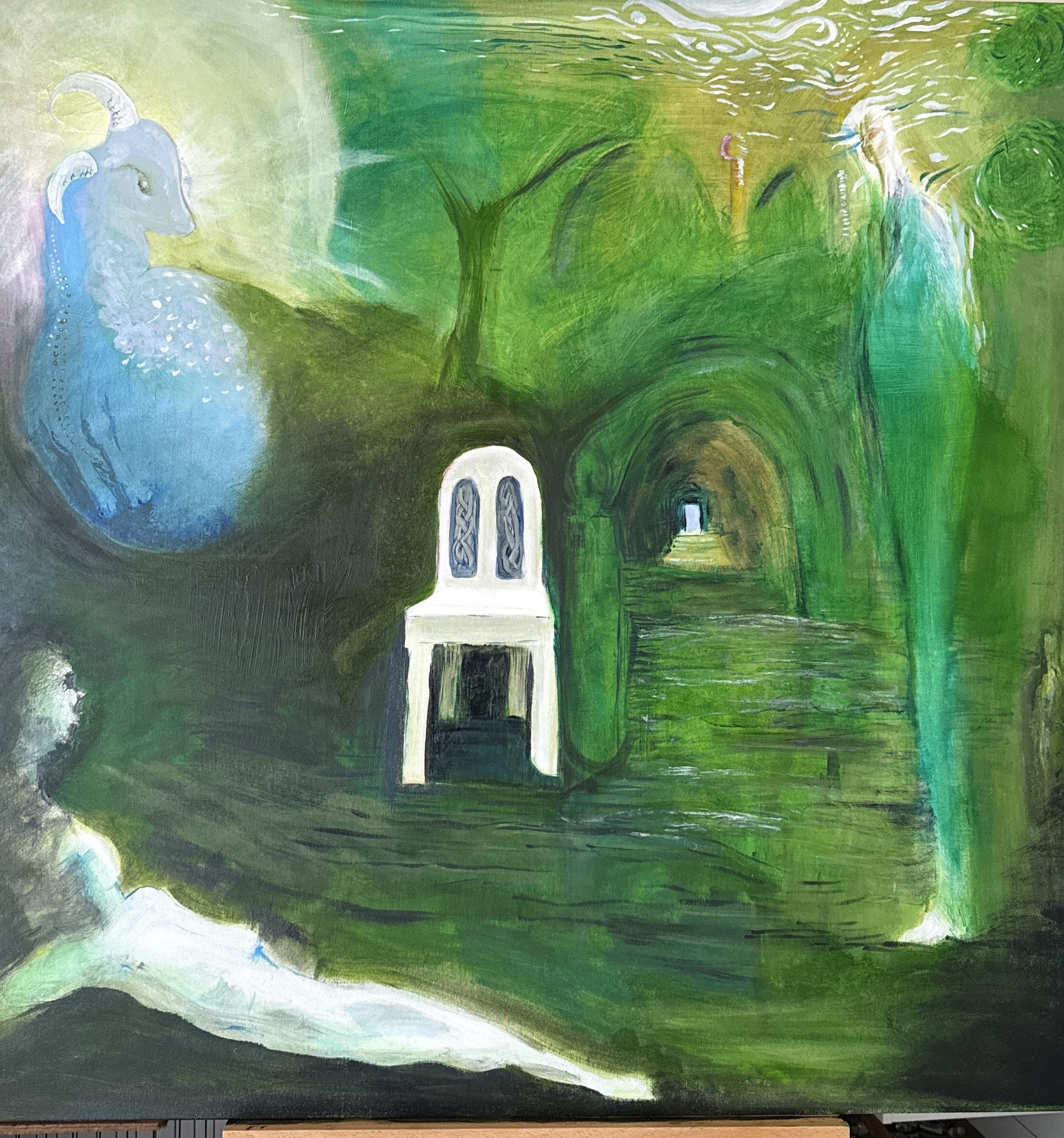
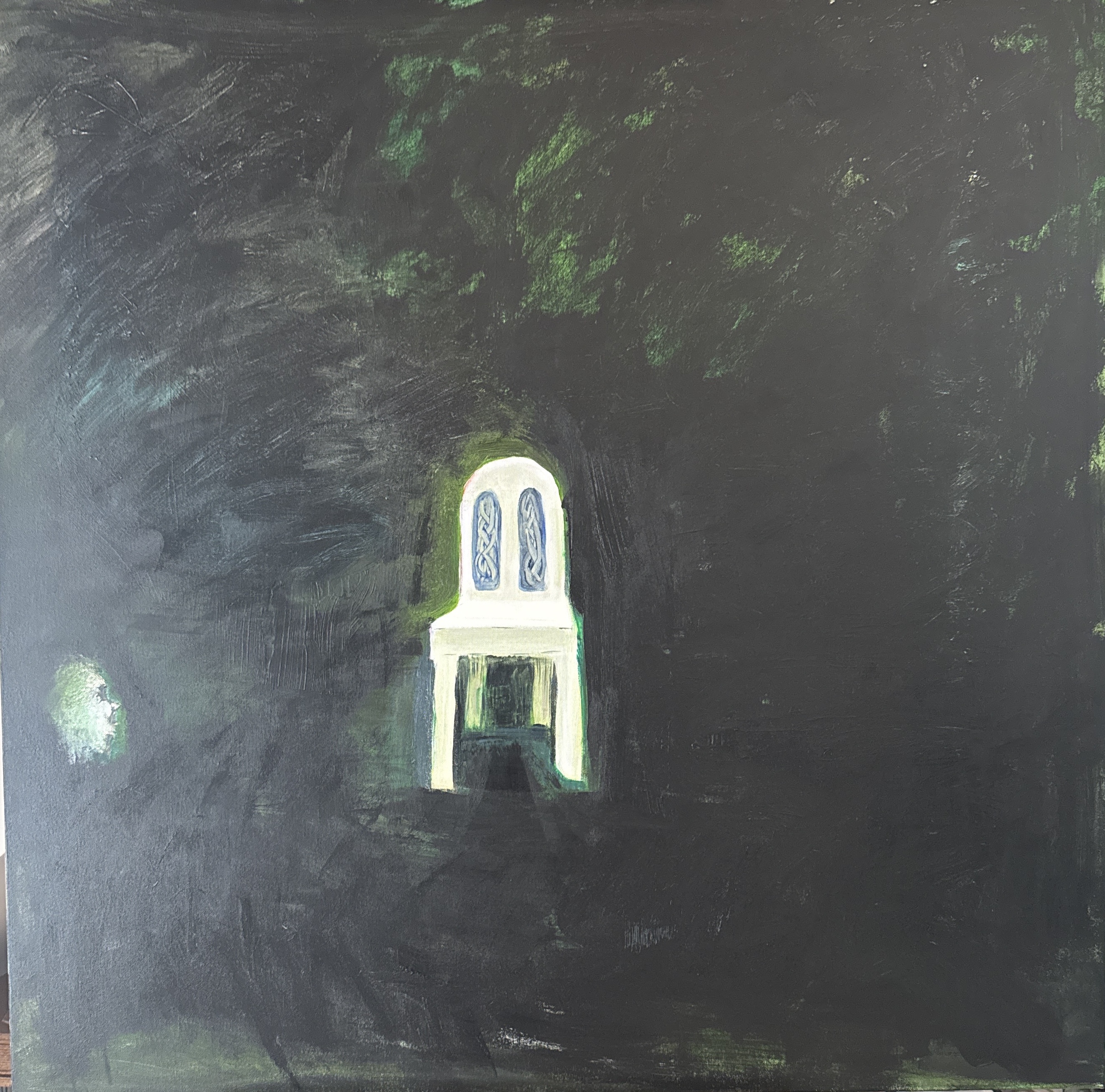
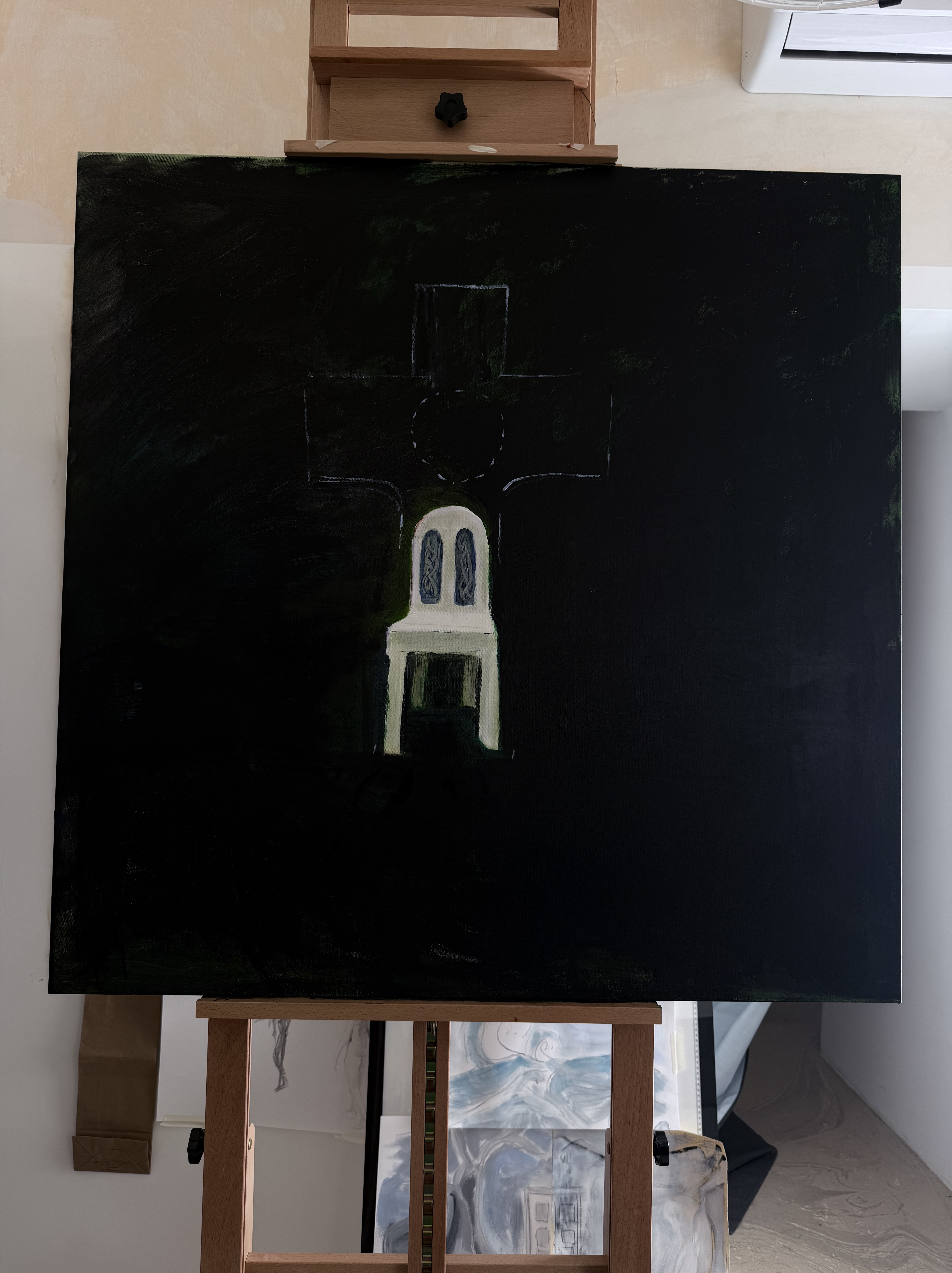
As the weeks progressed, I began removing elements. First the creature. Then the figures. Then the colour. Eventually I was left with a dark field and a single chair within the structure of a cross.
The moment I stripped it back, something shifted.
It felt more honest.
Not more impressive.
Not more resolved.
More honest.
And that honesty came with discomfort.
Because when you remove complexity, you remove hiding places.
The Outer Voice and the Inner Commentator
All my life I’ve been good at reading rooms. It built my career. It opened doors across countries and cultures. It allowed me to adapt, persuade, connect. That outer voice — the one that reads, responds and performs — is highly competent.
But there is another voice.
The inner commentator.
It narrates. Judges. Compares. It evaluates every move as if life were a reality show being scored in real time.
In business, that voice keeps you sharp.
In art, it can suffocate you.
This week I realised something important.
When I was painting myth and symbolism heavily, the commentator had endless material to critique. Too illustrative. Too literal. Not contemporary enough. Too narrative. Not flat enough. Too polished. Not polished enough.
When I reduced the painting to black, white and space, the commentary softened.
There was nothing left to measure against an academic rulebook.
No anatomy to correct.
No perspective to perfect.
No colour harmony to justify.
Just space.
Weight.
Silence.
That silence was confronting — and freeing.
Reclaiming the Symbol
The cross that emerged on the canvas wasn’t theological.
It was archaeological.
A Celtic structure.
Something older than doctrine. Something tied to land, stone, inheritance.
Inside the circle I painted a form I’ve been calling a “self-hug.”
It is not sentimental.
It is integration.
The act of holding yourself when the outer world feels loud.
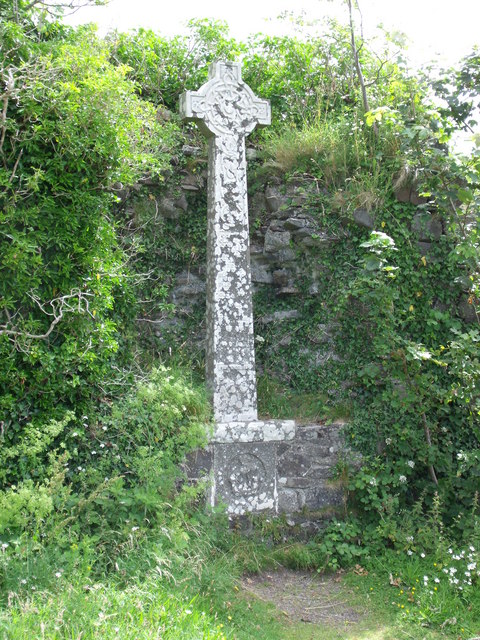
At one point I asked myself whether the cross was preaching. It wasn’t. It was illuminating. Illuminating loss. Illuminating transition. Illuminating the uncomfortable space between who I have been and who I am becoming.
What surprised me most was this:
The painting became stronger the more I removed.
The more I stopped explaining.
The more I stopped illustrating.
The more I stopped trying to impress.
It began asking a question instead of making a statement.
And that, I think, is the real shift.
Identity and the Difficulty of Silence
When you’ve built a life around competence, silence feels like regression.
No applause.
No metrics.
No feedback.
No performance.
Just you.
That can resemble depression.
But sometimes it’s not depression.
Sometimes it’s the nervous system no longer fuelled by external validation.
This week in the studio I realised I have spent years fitting in — professionally, culturally, socially. That adaptability is strength. It is also a habit.
When you are highly skilled at adapting, you must work twice as hard to stand still.
The painting forced me to stand still.
- To choose space over spectacle.
- To choose depth over decoration.
- To choose honesty over finish.
It wasn’t comfortable. But it felt aligned.
Chance and Design
There was a moment when I felt I was “going crazy” with the canvas. Darkening. Scraping back. Reworking. Almost restarting.
But what was really happening was negotiation.
Design wanted control.
Chance wanted freedom.
When I allowed the two to dance — scraping back layers, glazing lightly, letting texture breathe without dominating — the painting began to settle.
Not resolve.
Settle.
There’s a difference.
Resolution closes.
Settlement holds.
This piece now holds something. Not an answer. A question.
And questions are far more interesting than declarations.
What This Has Taught Me
- The inner critic grows louder when you are focused on performance.
- Removing elements can reveal identity faster than adding them.
- Silence is not emptiness; it is unperformed space.
- The work that feels honest often feels least impressive at first.
- You cannot escape your training — but you can choose when not to use it.
The cross may evolve.
The circle may deepen.
The field may soften.
But the central lesson will remain:
Identity is discovered through subtraction.
My summary as an image!

The wolf does not need to howl to prove existence.
It knows its place in the landscape.
That is the identity I am searching for.
Not louder.
Not more complex.
Not more impressive.
Just aligned with my values and my nature.
And perhaps that is the quietest, strongest work any of us can do.
 Tim Taylor
Leave a comment